Which forex pairs are most volatile depends on the period and how you measure their price movements. Below, we look at pairs that can experience sharp moves, examples of less volatile pairs, and the most traded pairs by global FX turnover.
It's important for traders to conduct their own technical analysis before trading. Some exotic pairs that include the US dollar can experience sharp price moves.
As part of a forex trading strategy, traders can monitor the US Dollar Index to see how the US dollar moves against a basket of other currencies.
What is volatility in forex?
In forex trading, volatility measures how much an exchange rate fluctuates over time. One common measure of historical volatility is the standard deviation of daily percentage returns, which shows how widely those returns vary. By contrast, the tracker’s 30-day change compares the exchange rate at two points in time. A pair can fluctuate sharply during the month and still finish close to where it started.
Read also: What is market volatility in forex?
What are the most volatile forex pairs?
No single forex pair is always the most volatile. It depends on the period you’re looking at and how you measure volatility. AUD/JPY, CAD/JPY, GBP/AUD, USD/MXN, USD/ZAR and USD/THB are examples of pairs that can experience sharp price moves. They’re not listed in order of volatility.
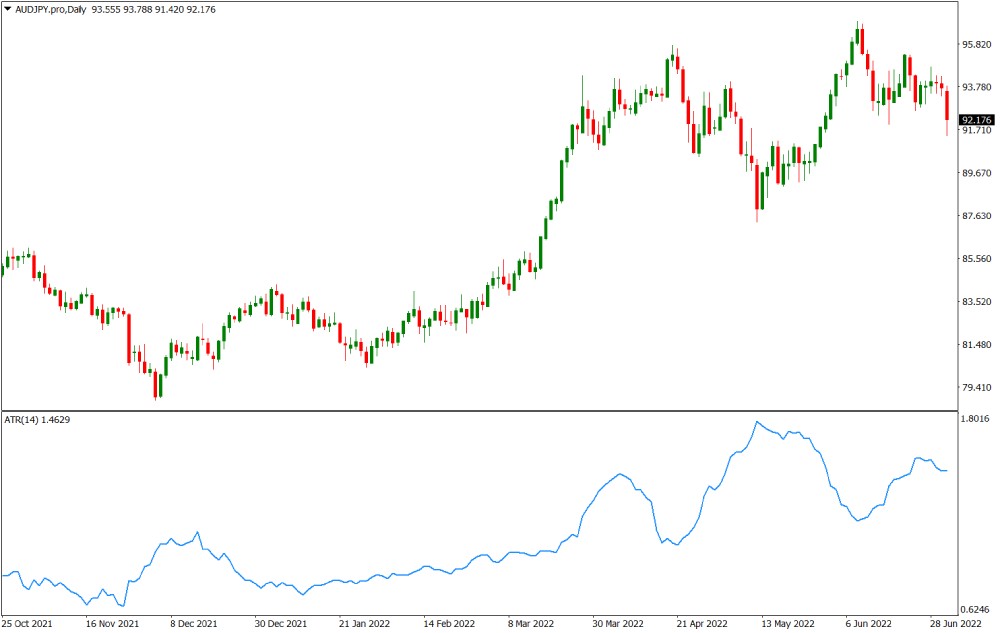
AUD/JPY
The Australian dollar and Japanese yen can respond differently to changes in market sentiment. The Australian dollar can benefit when investors are more willing to take risks, while the yen is often regarded as a safe-haven currency. These different responses can contribute to sharp moves in AUD/JPY.
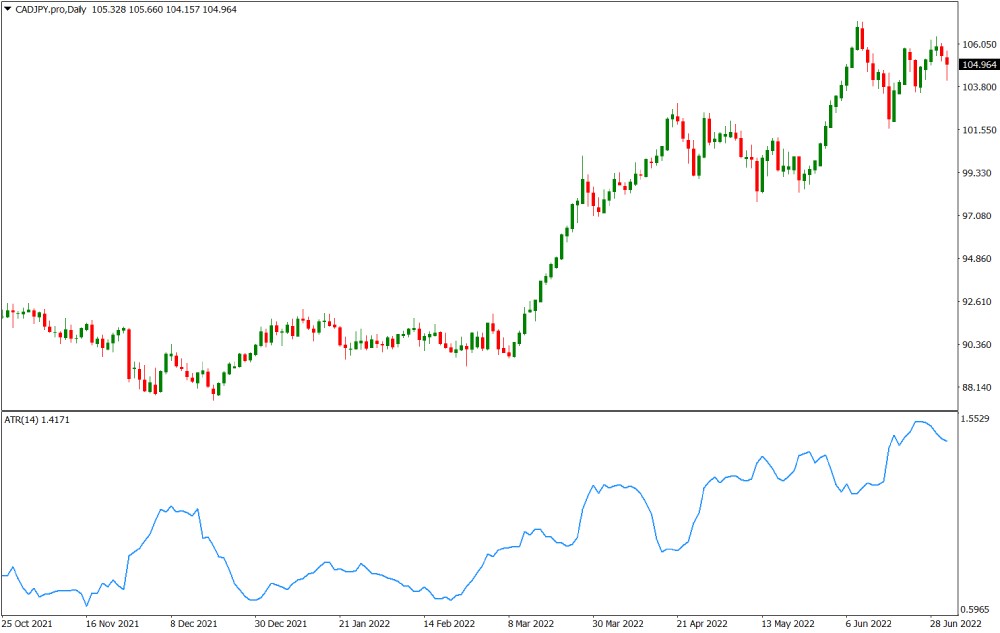
CAD/JPY
CAD/JPY can move when oil prices shift or when the Canadian dollar and Japanese yen respond differently to changes in market sentiment.
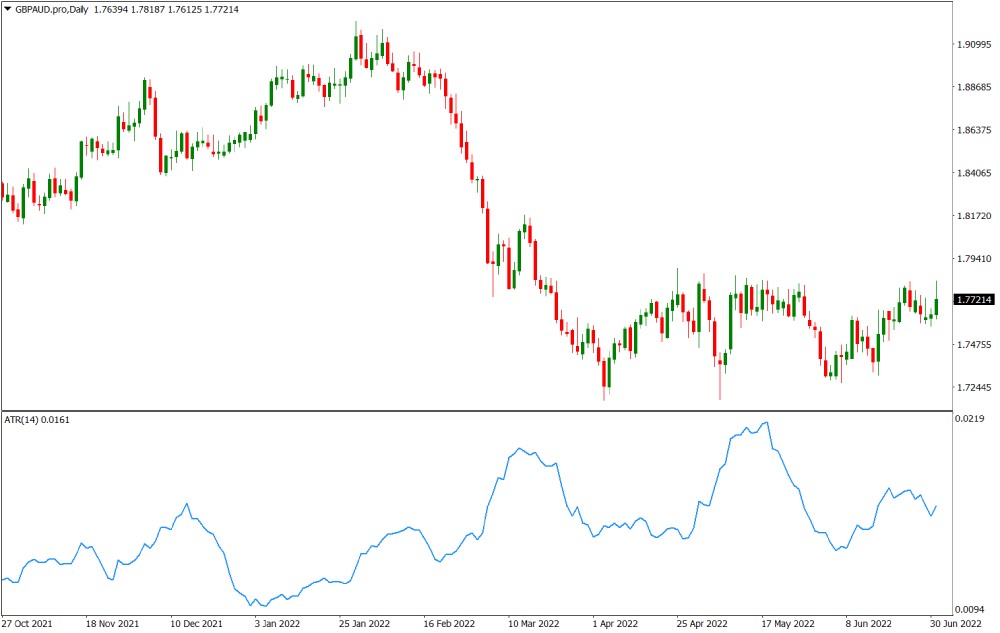
GBP/AUD
GBP/AUD can respond to interest rate decisions from both the Bank of England and the Reserve Bank of Australia, as well as to shifts in global commodity prices and market sentiment.
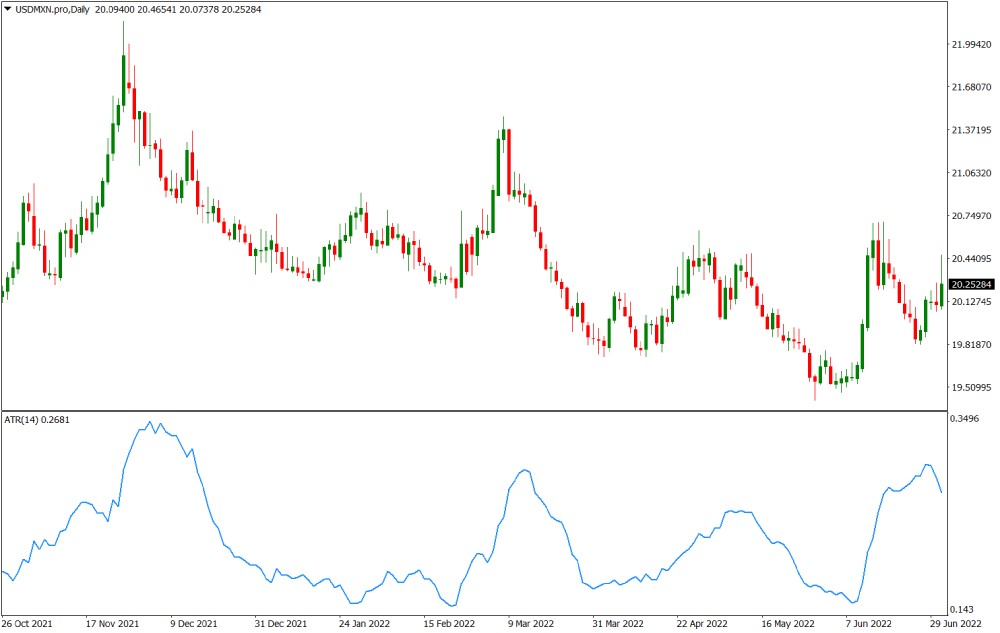
USD/MXN
The Mexican peso is one of the most liquid emerging market currencies, but it can still experience sharp price moves. Oil prices, interest rate differentials and geopolitical developments can all affect USD/MXN.
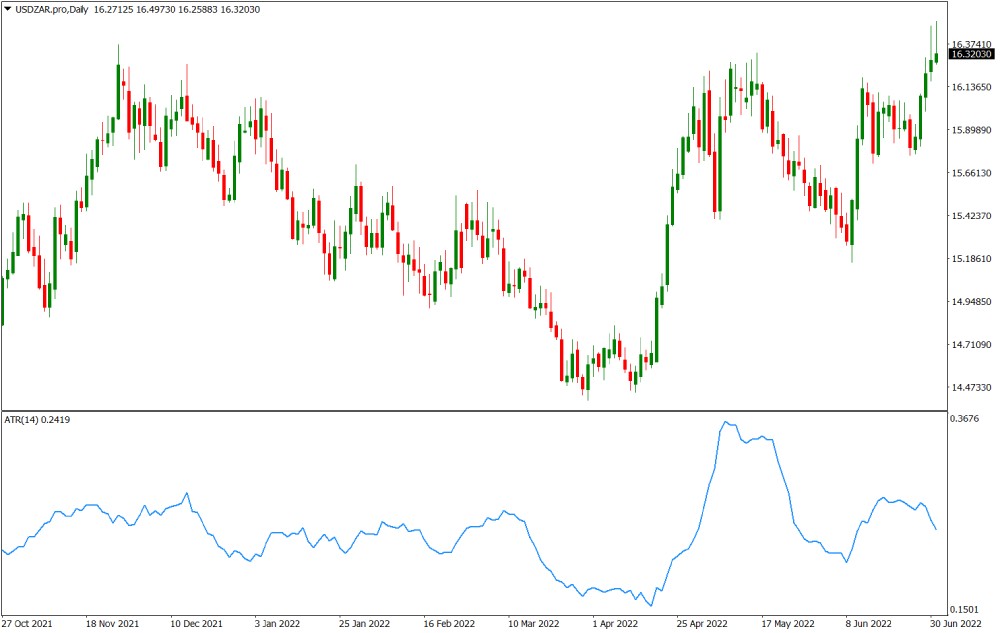
USD/ZAR
The South African rand is considered a commodity currency because South Africa is a major commodity exporter. USD/ZAR can respond to changes in commodity prices, political developments and shifts in investors’ appetite for risk.
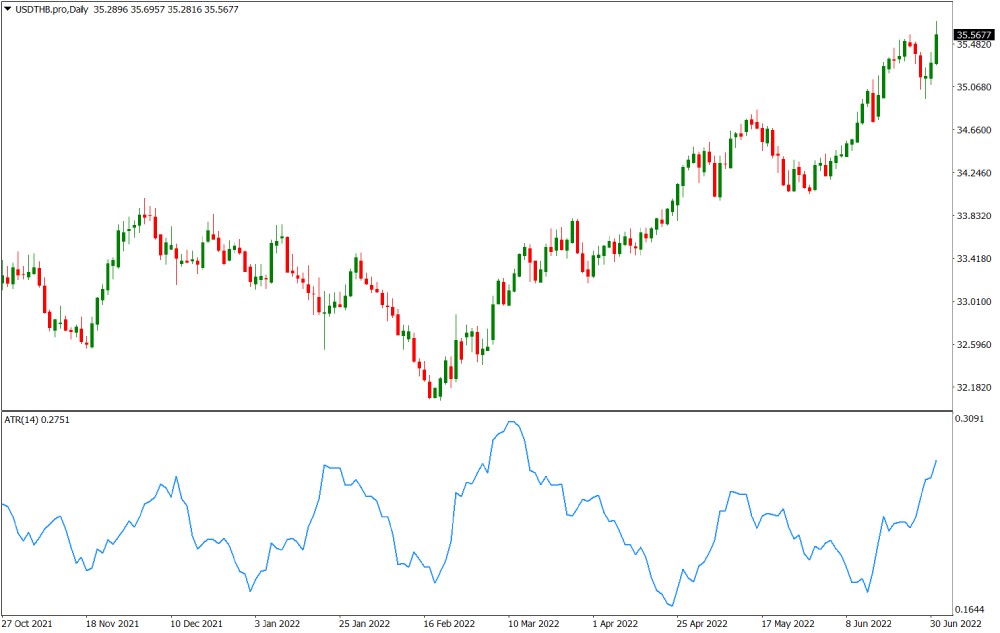
USD/THB
USD/THB can respond to changes in regional trade and tourism flows, as well as changes in the value of the US dollar.
Forex pair tracker: 30-day changes
The table below shows the latest available exchange rates and 30-day percentage changes for selected major, minor and exotic forex pairs. The table ranks the pairs by their 30-day change when data is available. A dash means the value is unavailable.
| Rank | Currency Pair | Current Rate | 30-Day Change* | Category |
|---|---|---|---|---|
| 1 | AUD/USD | 0.66169 | 5.77% | Major |
| 2 | USD/ZAR | 17.50736 | 5.48% | Exotic |
| 3 | AUD/JPY | 105.256 | 4.41% | Minor |
| 4 | GBP/AUD | 1.97579 | 3.79% | Minor |
| 5 | USD/CAD | 1.43624 | 2.62% | Major |
| 6 | USD/MXN | 19.24563 | 2.47% | Exotic |
| 7 | EUR/USD | 1.09390 | 2.27% | Major |
| 8 | GBP/USD | 1.30735 | 2.21% | Major |
| 9 | USD/CHF | 0.83975 | 1.87% | Major |
| 10 | USD/JPY | 159.073 | 1.45% | Major |
| 11 | CAD/JPY | 110.757 | 1.14% | Minor |
| 12 | USD/THB | 34.045 | 0.89% | Exotic |
| 13 | GBP/JPY | 207.964 | 0.79% | Minor |
| 14 | CAD/CHF | 0.58469 | 0.74% | Minor |
| 15 | EUR/GBP | 0.83673 | 0.07% | Minor |
* The 30-day change compares the latest available exchange rate with the rate 30 days earlier. It does not measure how much the rate fluctuated between those dates.
What are the least volatile forex pairs?
EUR/CHF and EUR/GBP are examples of pairs that can experience periods of relatively low volatility. Neither is consistently the least volatile pair, and high trading activity does not guarantee small price moves.
EUR/CHF
The Swiss franc is often regarded as a safe-haven currency, but EUR/CHF can still move sharply. The market reaction in 2015 is an example of why historically quieter trading does not guarantee low volatility.
EUR/GBP
The euro area and the UK have close economic ties, but the euro and sterling can respond differently to economic news and monetary policy decisions.
How volatile are currency pairs involving the UAE dirham?
Since 1997, the UAE dirham is pegged to the US dollar at about AED 3.6725 per USD, so USD/AED generally moves within a narrow range. That does not mean the dirham is stable against every currency. The dirham rises and falls globally with the dollar. For example, if the euro rises against the US dollar, it generally rises against the dirham too. The USD/AED peg explains this pair’s behaviour, not the volatility of every Middle Eastern currency pair.
What are the most liquid forex pairs?
EUR/USD was the most traded forex pair by global turnover in April 2025, accounting for 20.7% of the total, followed by USD/JPY (14.4%) and USD/CNY (8.1%). The table compares pairs by trading turnover, a guide to market activity rather than a direct measure of trading costs or execution quality.
Average daily turnover of the most traded forex pairs
| Pair | Share of global FX turnover | Approx. daily turnover (USD) |
|---|---|---|
| EUR/USD | 20.7% | $1.97 trillion |
| USD/JPY | 14.4% | $1.37 trillion |
| USD/CNY | 8.1% | $770 billion |
| GBP/USD | 7.5% | $713 billion |
| USD/CAD | 5.2% | $495 billion |
| AUD/USD | 4.9% | $466 billion |
| USD/CHF | 4.8% | $456 billion |
What is the difference between trading currency pairs with high volatility versus low volatility?
A position in a higher-volatility pair can change in value more sharply than a comparable position in a lower-volatility pair. Lower volatility does not necessarily mean tighter spreads or easier execution. Currency pairs are commonly grouped into three categories:
Major pairs
Major pairs combine the US dollar with another major currency. Examples include EUR/USD, GBP/USD, USD/JPY and USD/CHF. The US dollar, Swiss franc and Japanese yen are often regarded as safe-haven currencies, although their behaviour can vary with market conditions.
Minor pairs
Minor pairs, also known as major crosses, combine two major currencies without including the US dollar. Examples include EUR/GBP, GBP/JPY and CAD/CHF.
Exotic pairs
Exotic pairs typically combine a major currency with a less widely traded currency, often from an emerging market. Examples include USD/TRY, USD/MXN and USD/ZAR.
Exotic currency pairs are generally less liquid than major pairs and can experience sharper price moves. Lower liquidity can amplify a move, but volatility also depends on economic news, monetary policy surprises and market sentiment.
Liquidity describes how easily a currency pair can be traded without significantly moving its price. An order’s price impact depends on its size relative to the liquidity available at the time. Less liquid pairs can also have wider bid–ask spreads, increasing trading costs.
How to trade currency pair volatility?
To determine which currency pairs are the most suitable ones, a trader must first have a look at their trading strategy. A trader utilising a range trading strategy will want to avoid exotic currency pairs but rather look at major currency pairs and certain minor pairs such as EUR/CHF and EUR/GBP.
On the other hand, a trader that is using a breakout or trend-following strategy might want to look at volatile currency pairs - which could be anything from minor pairs such as EUR/JPY and GBP/JPY to exotic pairs like USD/ZAR and USD/TRY. Of course, major currency pairs should not be disregarded completely, but traders should closely monitor the different levels of volatility in those.
The risk appetite of a trader is also an important factor. While you could take a large risk trading any currency pair, risk-averse traders might feel more comfortable trading currency pairs with less volatility as they cannot stomach the volatility and sharp reversals that come with certain FX pairs such as the Turkish Lira and South African Rand crosses.
Ready to trade your edge?
Join thousands of traders and trade CFDs on forex, shares, indices, and commodities!
This information is not to be construed as a recommendation; or an offer to buy or sell; or the solicitation of an offer to buy or sell any security, financial product, or instrument; or to participate in any trading strategy. It has been prepared without taking your objectives, financial situation, or needs into account. Any references to past performance and forecasts are not reliable indicators of future results. Axi makes no representation and assumes no liability regarding the accuracy and completeness of the content in this publication. Readers should seek their own advice.

Milan Cutkovic
Milan Cutkovic is an experienced trader and market analyst specializing in forex, indices, commodities, and stocks. He was one of the first traders accepted into the Axi Select program, which identifies talented traders and supports their professional development.
He is passionate about helping others improve their trading skills through educational articles, eBooks, and content published on the Axi blog. His work is regularly featured and quoted in major international media outlets, including Yahoo Finance, Business Insider, Barron's, CNN, Reuters, New York Post, and MarketWatch.